Spoons
Also called: Spoon theory
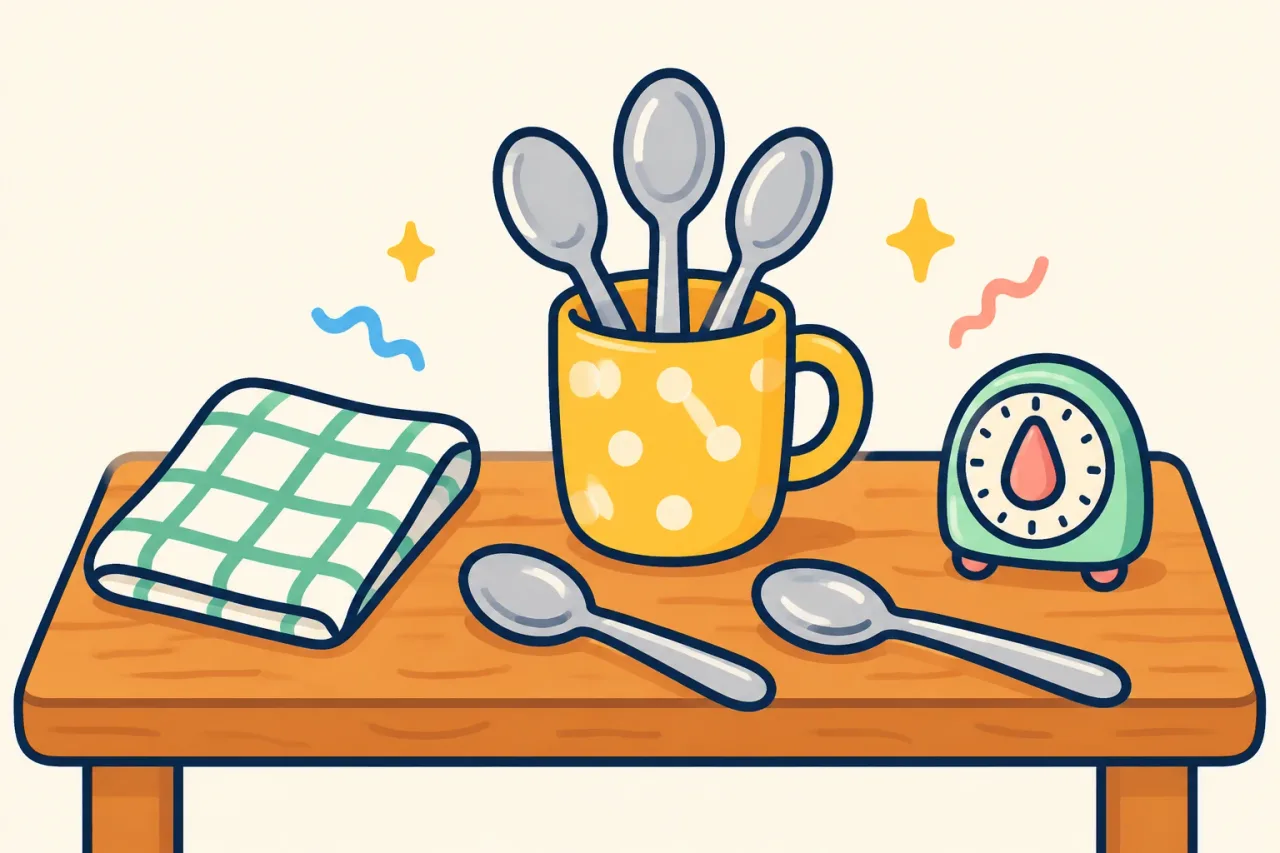
Spoons are a way of counting energy. You start the day with a limited number, and each task costs one or more. When the spoons run out, you are done, however much is left on the list.
What it means in plain words
Picture a small handful of spoons. Every task takes some out of your hand. Getting dressed might cost one. A phone call might cost another. A big job might cost several.
The count is not the same for everyone. It is not the same every day either. Many people with ADHD say that tasks which look small from outside can cost a lot, especially tasks with no clear place to start.
The point of the idea is to stop treating energy as endless. It gives you a way to say “I am out of spoons” instead of “I have failed”.
What it looks like in daily life
Here are three examples.
- You get through a full day at work. At home you stand in the kitchen and cannot face the dishes. The spoons went on the day, not on the dishes.
- Replying to one email costs more than it looks like it should. On a bad day, that email is the only job you manage.
- Sorting a pile of post takes a lot of small decisions. It can cost far more than putting the bins out, even though it is a smaller job.
None of this means you are not trying. Stuck is not lazy.
What tends to help
A low-spoons day is a day to lower the bar.
Pick the one thing that matters most today. Let the rest wait. Then make that one thing smaller. Fill one bin bag. Clear one surface. Set a timer for five minutes and stop when it ends.
If you cannot even start, How to clean when you are too overwhelmed to start gives a fixed order of steps for that moment. If you want a daily tidy that still works on a bad day, try The ten-minute reset.
Spend your spoons on what matters most, and treat the rest as optional. If low energy is a worry for you, speak to a qualified professional.